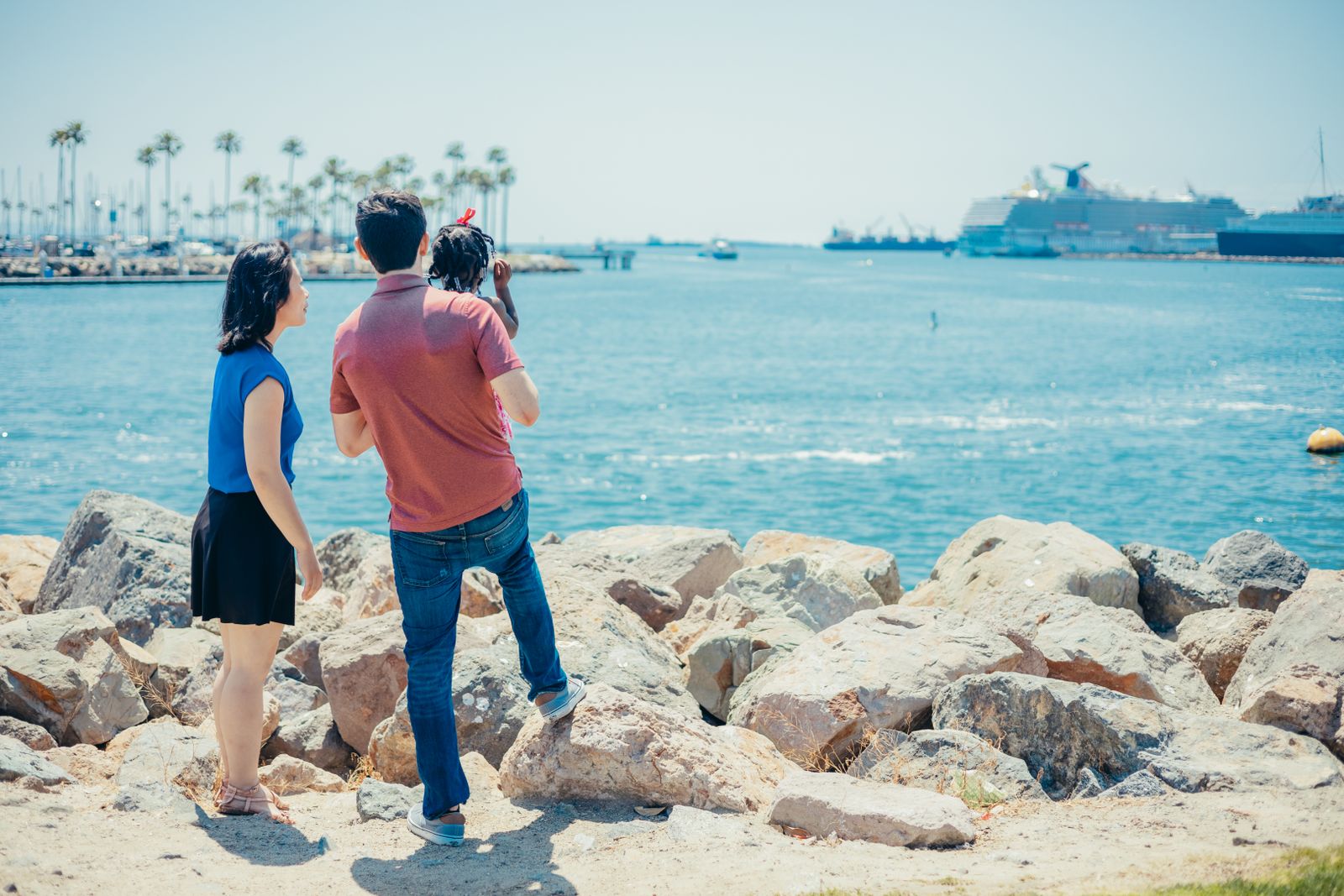
Family cruise bookings are up about 40% year over year for 2026, and the logic checks out: unpack once, feed picky eaters without a nightly restaurant hunt, and hand the 4pm crazies to a staffed kids club. But a first family cruise is won or lost at booking, before you ever pack a bag. Here’s the real 2026 math, the kids-sail-free deals worth grabbing, and the two rules that blindside first-time cruise parents.
Start with the real math, not the ad price
A 3- or 4-night Caribbean sailing on Royal Caribbean, Carnival, or MSC runs roughly $350–600 per person for an interior cabin in 2026. For a family of four, that’s about $1,400–2,400 in base fare. It is not what you’ll actually pay.
Taxes and port fees add around $200 for four people. Then come automatic gratuities, charged per person per day: about $17 on Carnival, $18.50 on Royal Caribbean, and $20 on Norwegian at 2026 rates. Kids pay the full rate on most lines — four people on a 4-night Royal Caribbean sailing is roughly $296 in tips before anyone orders a soda.
Budget $3,000–3,500 all-in for a first 4-night cruise and the final bill won’t sting. If you’re weighing a ship against a resort, compare that number to the math in our guide to all-inclusive family resorts on a budget — for a short first trip, the cruise usually wins on price per day of actual vacation.
What about Disney? Short 2026 Bahamas sailings average $1,300–1,900 per person for an inside cabin, which is two to three times the mainstream lines. It’s a lovely product. Save it for cruise number two, once you know your crew actually likes ships.
Kids-sail-free deals are real, but read the fine print
Three major lines run genuine kids-sail-free promotions right now. Royal Caribbean: kids 12 and under sail free as third and fourth guests on select sailings. Norwegian: kids sail free as third and fourth guests on Caribbean and Bermuda sailings through 2026. MSC goes furthest, with kids and teens 18 and under sailing free when they share a cabin with two adults.
The fine print matters. “Free” never includes taxes and port fees, the deals cover select sailings and new bookings only, and the kids must be in the same stateroom as two full-fare adults. Carnival skips “free” entirely and discounts third and fourth guests instead — still worth pricing out.
The watch-out: don’t let a booking site talk you into two cheap connecting cabins “for space.” Split the family across two rooms and the kids-sail-free pricing usually evaporates, because each room then needs its own paying adults. One quad cabin, everyone together, deal intact.
Pick the ship for the kids club, not the itinerary
On a first cruise the itinerary barely matters — the ship is the destination, and the kids club decides whether the grown-ups get a vacation too. The age rules differ more than you’d expect.
Royal Caribbean’s Adventure Ocean is free, takes kids from age 3, and requires them to be fully potty trained: no pull-ups, no exceptions. Disney’s clubs also start at 3, potty trained. Carnival’s Camp Ocean starts at age 2 and accepts kids in diapers, which quietly makes it the easiest line with a young toddler.
Under those ages you’re in nursery territory: limited spots, hourly fees. Royal Caribbean’s nursery takes 6–36 months at $9/hour daytime and $12/hour evenings; Carnival’s runs about $6–8/hour. Book nursery slots the afternoon you board, because sea-day sessions fill first.
The pool rule nobody warns you about
US public-health rules bar anyone in a diaper — including swim diapers — from the pools on ships sailing from US ports. Swim diapers hold the mess but not the germs, so the ban is firm and crews enforce it. A toddler who isn’t potty trained can’t go in the main pools, full stop.
A handful of Royal Caribbean ships have dedicated baby splash zones built for diapered kids; most ships across all lines have nothing of the sort. If your youngest isn’t potty trained yet, confirm the specific ship has one before you book, not at the pool deck.
And whatever your kids’ ages: keep an adult within arm’s reach in the water. Pool decks are crowded and loud, and not every pool on every ship has a lifeguard.
Birth certificates work — passports are smarter
On a closed-loop cruise (one that starts and ends at the same US port, which covers most Caribbean and Bahamas loops), US kids under 16 can sail with a certified birth certificate. It has to be the state, county, or city vital-records copy — the hospital keepsake with the footprints doesn’t count. Adults need a passport, or a birth certificate plus government photo ID.
The cruise lines still push passports for everyone, and they’re right. If a kid spikes a fever in Nassau and you have to fly home, no passport means consulate paperwork instead of an afternoon flight. A child’s first passport is $135 and takes 4–6 weeks in 2026, so apply the week you book.
The booking playbook, start to finish
Book 3 or 4 nights, not 7. If everyone loves it, next year’s week-long cruise plans itself; if it flops, you were only out three days. Short Bahamas and Caribbean loops leave year-round from Miami, Port Canaveral, Galveston, and Tampa, so much of the country can drive or take one short flight.
Take the interior quad cabin without guilt. It keeps the kids-sail-free deal intact, and interior rooms are pitch dark — kids genuinely sleep later in them. Ask for midship on a lower deck, which moves least if anyone’s prone to queasiness.
With a toddler, we’d skip the balcony this first time. The doors lock, but an interior or oceanview room removes the worry entirely and costs less. Then start packing early — our one-evening family packing list works for cruises with one addition: the documents folder rides in the day bag, never the checked luggage.
FAQ: first family cruise
What’s the best age for a first family cruise?
Ages 3–10 is the sweet spot: old enough for the free kids clubs, young enough to think the waterslide is the whole vacation. Under 3 works best on Carnival, where the club starts at 2 and takes kids in diapers.
Do kids really pay gratuities?
On most lines, yes, at the full adult rate — a 4-night trip for four adds roughly $270–330 in automatic tips depending on the line. A few lines exempt infants, so check your line’s policy before you sail rather than assuming.
What about seasickness with kids?
Today’s big ships are surprisingly stable, and a midship cabin on a lower deck feels the least motion. Don’t raid the medicine aisle on your own: most motion-sickness medications aren’t approved for young children, so ask your pediatrician before you sail, not from the middle of the ocean.
How far ahead should we book?
For school-break weeks, 6–9 months out — quad cabins are the scarcest rooms on the ship, and the kids-sail-free inventory goes first. Off-peak, deals pop up closer in, but a family of four in one cabin has far fewer rooms to choose from than a couple does.


Leave a Reply