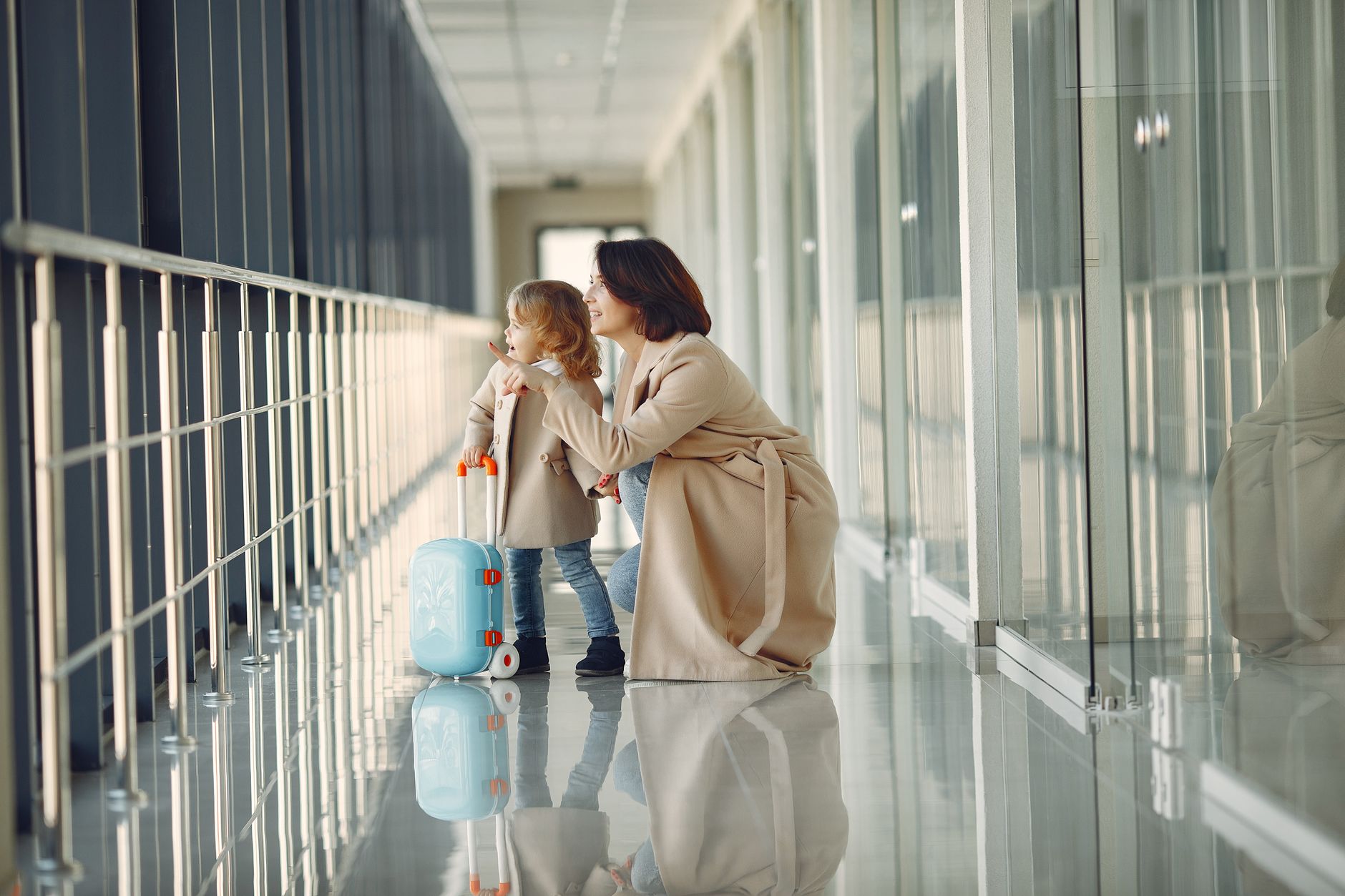
Flying with a toddler for the first time has a reputation, and you’ve probably heard all of it. The seat kicking. The scream somewhere over Kansas.
Here’s the thing: most first flights go better than the horror stories promise. Toddlers are unpredictable, but airports and airplanes are not, and the predictable parts can be planned half to death.
This guide covers the 2026 rules that actually matter (lap-child pricing, sit-together guarantees, security exceptions), plus the tricks seasoned family travelers do on autopilot. Take what helps. You know your kid.
Book like the flight depends on it (it mostly does)
A few booking decisions do more for your sanity than anything you’ll pack.
Under age 2, your toddler can fly on your lap for free on U.S. domestic flights; international routes usually charge about 10% of the adult fare plus taxes. That’s the 2026 standard across major carriers. Worth knowing, though: the FAA and the American Academy of Pediatrics both recommend buying the seat and using an approved car seat instead — more on that below.
Sit-together rules have improved but still aren’t law. As of mid-2026, Alaska, American, Frontier, Hawaiian, and JetBlue guarantee a child 13 or under sits next to their adult at no extra cost, as long as adjacent seats exist when you book and everyone’s on one reservation — the Department of Transportation’s family seating dashboard tracks who’s committed. Book direct with the airline, book early, same reservation for everyone.
Direct flights beat cheap flights. A layover doubles the boardings and the chances a delay lands right on top of nap time. If a connection is unavoidable, leave at least 90 minutes between flights.
On timing: fly during your kid’s best stretch of the day, which for most toddlers is morning. First flights out also have the fewest delays. The dreamy “they’ll sleep the whole red-eye” plan works for some kids and goes very badly for others.
Airport day: fewer moving parts, calmer everyone
The airport is the manageable part. Truly.
Bring the stroller all the way to the gate. Nearly every U.S. airline gate-checks strollers and car seats free: tag them at the gate desk, fold at the jet bridge, and they’re back at the aircraft door or baggage claim when you land (ask which when you tag).
Security is friendlier to parents than the line makes it look. Formula, breast milk, and toddler drinks over 3.4 oz are all allowed through TSA — they’re screened separately, so pull them out of the bag and tell the officer up front. The stroller rolls through the X-ray; your toddler walks through with you or rides in your arms.
Give yourself two hours for domestic, then don’t spend the spare 40 minutes sitting at your gate. Find an empty gate nearby and let your kid run laps. Tired legs board better.
One honest watch-out: family pre-boarding sounds great and is often a trap. It’s 25 extra minutes holding a squirmy toddler in a metal tube. With two adults, split up — one boards early with the bags, the other keeps the kid moving and boards last.
The seat question, answered honestly
If you bought a seat, an FAA-approved car seat is the safest way for a toddler to fly. Look for the sticker certifying it for aircraft use, install it at the window so it doesn’t block the row, and keep the seat’s own forward- or rear-facing rules exactly as you would in the car. Bonus: a familiar seat raises the nap odds.
Don’t want to haul a car seat through the terminal? The CARES harness is the only FAA-approved alternative: a strap-on harness for kids 22 to 44 pounds (at least age 1 and able to sit upright on their own) that weighs under a pound and installs on the seatback in about a minute. A few seat types don’t allow it, so flag it to the airline ahead of time.
Flying with a lap child anyway? It’s allowed, and plenty of families do. Keep your own seatbelt fastened on you alone — never loop one belt around both of you — and ask at the gate whether the flight has open seats. On an uncrowded plane, crews will often let you bring your gate-tagged car seat on board and use it in the empty seat.
Ears, snacks, and the actual flight
Toddler ears hurt when cabin pressure changes faster than little ears can equalize. The fix is swallowing: nurse, bottle, or sippy cup on takeoff, then start a drink or snack on the way down. Descent begins 30 to 40 minutes before landing, earlier than you’d think.
Snack safety matters more in seat 23B than at your kitchen table — turbulence happens and sight lines are bad. For kids under 4, skip the classic choking risks: whole grapes, popcorn, whole nuts, hard candy. Pouches, soft muffin pieces, string cheese pulled into thin strips, and banana do the same job without the risk.
Entertainment works as a rotation, not one big toy. Fifteen to twenty minutes per item is a realistic toddler attention span at altitude: board books, chunky crayons, a sticker book, painter’s tape stuck across the tray table. New-to-them beats expensive. Our screen-free road trip activities list has a toddler-tested lineup that flies just as well.
And if a downloaded show buys you 40 quiet minutes at 36,000 feet, take it without guilt. Plane rules are not house rules. Just download at home — airplane Wi-Fi is a coin flip.
The meltdown plan (make one, hope to skip it)
Even good flights usually include one rough stretch. Plan for it so it doesn’t rattle you.
The oldest trick works best: when the seatbelt sign allows, get up and walk the aisle. Motion plus new faces resets most toddlers inside ten minutes, and the galley at the back is a fine place to stand and sway.
Something nobody tells you: most passengers are quietly rooting for you, and the rest have noise-canceling headphones. You don’t owe the cabin an apology tour. Handle your kid, not the audience.
One thing not to do: don’t give an antihistamine or any other medicine to make a toddler sleepy for a flight unless your pediatrician has specifically advised it for your child. Travel sedation isn’t a DIY call, and these medicines make some toddlers wired instead of drowsy.
Lower the bar, too. The goal isn’t a cute flight; it’s landing with everyone fed, safe, and mostly intact. And if a short hop has you reconsidering the whole thing, trains are far more toddler-forgiving.
FAQ: flying with a toddler
Does my toddler need their own plane ticket?
Not until their second birthday on U.S. domestic flights — under 2 flies free on your lap, or about 10% of the adult fare internationally. The FAA and AAP still recommend a purchased seat with an approved car seat as the safest option. From age 2, a seat is required.
Can I bring toddler milk and snacks through airport security?
Yes. Formula, breast milk, and toddler drinks over 3.4 oz are exempt from TSA’s liquids rule — declare them for separate screening. Solid snacks go through like any other carry-on food.
What’s the best time of day to fly with a toddler?
Whichever flight matches your kid’s happiest window — for most toddlers, that’s morning. Early flights also have the fewest delays. Red-eyes only pay off for reliable travel sleepers.
What if my toddler cries the whole flight?
It happens, it ends, and you’ll never see those passengers again. Walk the aisle when allowed, run your snack-and-book rotation, and offer a drink first — crying at altitude often traces back to ear pressure.


Leave a Reply