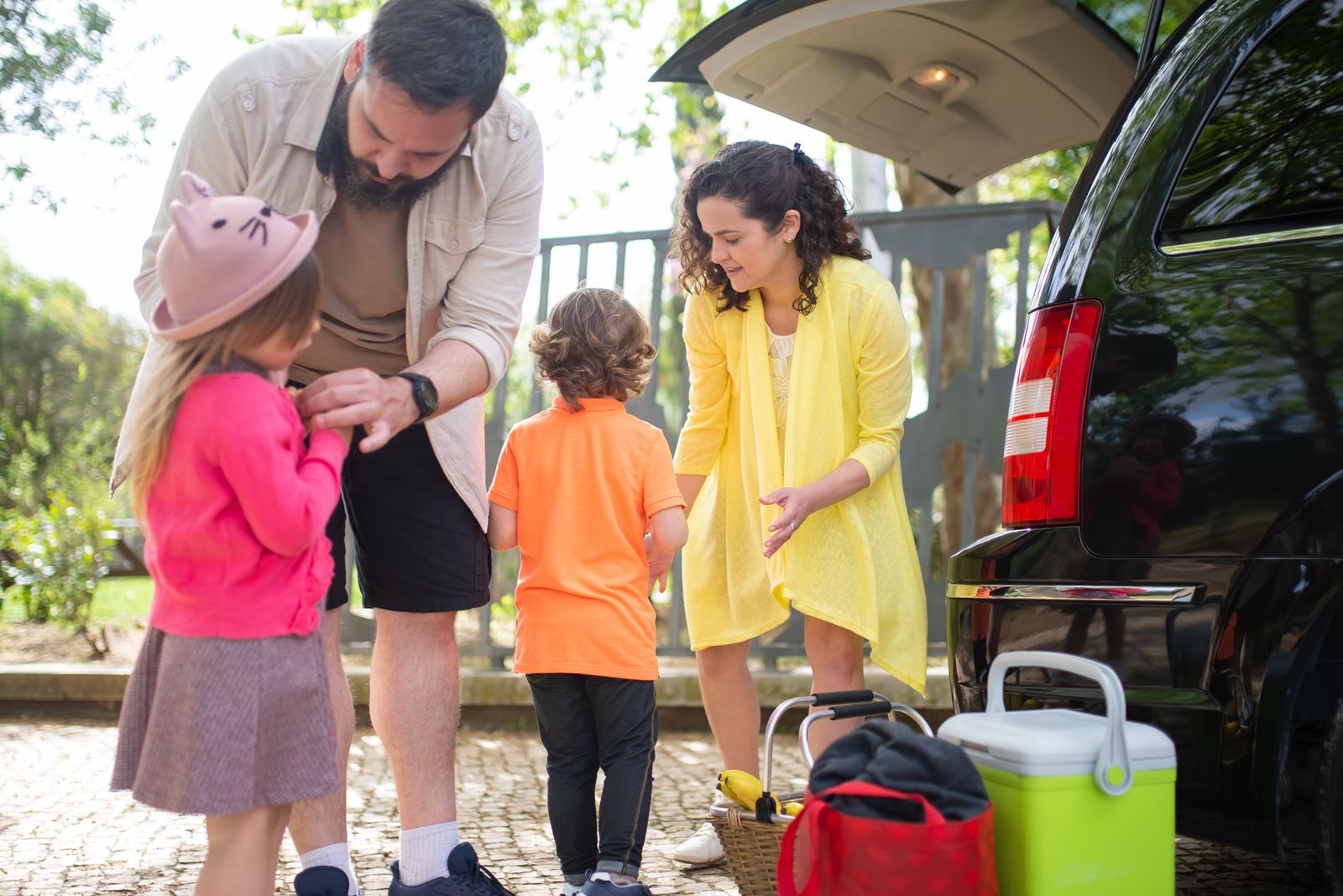
The drive is six hours. Somebody will ask for a snack at minute nine. Getting your road trip snacks and car setup for kids sorted the night before is what separates a calm handoff at 70 mph from digging through the trunk on a highway shoulder.
This is the system: zone the car, pack food that survives an August backseat, and follow the two snack safety rules that actually matter. Budget about an hour after bedtime. Most of it is deciding where things live, not buying gear.
Zone the car the night before
Think of the car as three zones: the kid zone, the cockpit, and the trunk. Anything a kid needs mid-drive lives within their reach or the front passenger’s. Everything else gets buried.
For the kid zone, hang a seat-back organizer on each front seat, facing the child behind it. Two-packs run $7–13 in 2026, and they’re the highest-value item in this whole setup. Load them with soft things only: sticker pads, Water Wow books, snack cups — our screen-free road trip activities guide covers the entertainment pockets in detail.
Here’s why “soft things only” isn’t fussiness. In a crash at 55 mph, a loose 20-pound bag hits with roughly 1,000 pounds of force. Metal water bottles, tablets, and the big snack tote get zipped into a pocket, wedged under a seat, or stowed in the trunk — never loose on the seat next to a harnessed child.
The cockpit zone is a small tote in the front passenger footwell: snack refills, wipes, trash bags. That’s the reaching adult’s kit, and it means nobody unbuckles while the car is moving. The trunk holds everything else, cooler loaded last so it sits on top.
Zones sorted. Now the part everyone actually argues about: the food.
Two snack rules that matter more than the snacks
Rule one: kids under three eat when the car is stopped, or when an adult who isn’t driving can see their face. A rear-facing toddler is invisible from the driver’s seat, and you can’t pull over fast on an interstate. Driving solo with a toddler? Snacks happen at stops — it adds ten minutes and removes the scariest risk of the day.
Rule two: skip the choking-hazard list entirely for kids under four. That means whole grapes, popcorn, whole nuts, hard candy, and anything round and firm like hot dog slices. Grapes are fine if you quarter them lengthwise at home; popcorn has no fix, so it stays home.
This isn’t overcaution. Pediatric guidance flags every one of those foods because kids this age don’t yet have all their molars and are still learning to grind food. A moving car makes any choking scare worse, so the food list stays boring on purpose.
One more night-before job: portion everything into cups and small bags. Handing a full-size bag into the backseat ends with 400 goldfish in the seat rails, and you’ll still be finding them in October.
Snacks that survive a hot car (and the ones that don’t)
The hot-car test: if it melts or spoils, it stays home. Same goes for anything that crumbles. A parked car blows past 100°F fast in summer, and the snack tote will sit through at least one long lunch stop.
No cooler needed:
- Applesauce or fruit pouches with recloseable caps — one hand, zero crumbs
- Dry cereal like Cheerios (fine from 12 months, dissolves fast)
- Thin crackers or breadsticks for the under-4s
- Pretzel sticks and freeze-dried strawberries for ages 4 and up — both too hard and crunchy for toddler molars
- Mini rice cakes, the kind that dissolve
- Roasted seaweed snacks — weirdly beloved, zero mess
From the cooler: string cheese, cucumber sticks, halved blueberries for the under-2 set, and squeeze yogurts frozen the night before — they pull double duty as ice packs and thaw to eating texture by mid-morning.
Leave at home: chocolate in any form (it melts above about 85°F), anything with red dye that stains, crumbly muffins, and cheese that isn’t in the cooler. This is also not the day to debut a new snack. You want boring and proven, saved up long enough to feel exciting.
The cooler and container setup
A small soft-sided cooler — about $20 in 2026 — beats a hard cooler for car trips. It wedges into a footwell without becoming a projectile, and it’s light enough to carry into a picnic stop with one hand.
Skip loose ice. Freeze two plastic water bottles overnight and they’ll keep the cooler cold, then turn into cold drinking water by afternoon. Plastic, not metal, for the same crash-physics reason as everything else in the cabin.
For toddlers, spill-proof snack catcher cups (about $4 each in 2026) are the workhorse. They fit standard cup holders, and a kid from 12 months up can serve themselves without emptying the cup on a hard brake. Fill them the night before and stage refills in zip-top bags in the cockpit tote.
One opinion, firmly held: ration. Two planned snack windows on a six-hour drive — mid-morning and mid-afternoon — plus a real lunch stop beats a rolling buffet. Constant grazing kills lunch and burns your whole inventory by hour three.
Drinks without disasters
Water only in the car. Juice is sticky when it spills (when, not if), and it doubles the bathroom stops. Milk goes off in the heat and the smell outlives the trip.
Straw cups with locking lids for the little ones — and pop the locks yourself before handing them back. Time big drinks to your planned stops; expect a bathroom request about an hour after any full cup.
The watch-out here: don’t restrict water on a hot drive to avoid stops. Kids in a sunny backseat need more water than you think, so plan the stop instead of skipping the drink.
The trash and cleanup system
A plastic cereal container lined with a grocery bag makes a rigid, tip-proof backseat trash bin. Swap the bag at every stop. Wipes go in every door pocket, not one central pack someone has to hunt for.
Pack a spill kit and keep it on top of everything in the trunk: an old towel, one spare outfit per kid, a gallon zip bag for whatever got wet. Our family packing list guide has the full spare-clothes math, but the road trip rule is simpler — the day you bury the spare outfit is the day you need it at a gas station in hour four.
The one-hour night-before checklist
- Hang the seat-back organizers; load soft items only
- Portion snacks into cups and zip-top bags; quarter the grapes now, not at a rest stop
- Freeze two plastic water bottles and the yogurt tubes
- Stage the cockpit tote: refills, wipes, trash bags
- Line the cereal-container trash bin
- Fill water cups, lids locked
- Load the trunk; cooler and spill kit go in last, on top
That’s the whole hour. The morning of, you add the cooler and the kids, and you leave.
FAQ
What are safe car snacks for a toddler?
For ages 1–3: fruit pouches, dry cereal, thin crackers, halved blueberries, and quartered grapes — eaten at stops, or with a non-driving adult watching their face. Skip whole grapes, popcorn, nuts, and hard candy entirely until at least age four.
How much food should I pack for a 6-hour drive?
Plan two snack windows plus one real meal stop. Roughly two cups of dry snacks and one cooler item per kid covers it — then add one extra round of everything for the traffic jam you didn’t plan.
How do I keep snacks cold without a big cooler?
A $20 soft-sided lunch cooler with two frozen plastic water bottles holds string cheese and yogurt safely through mid-afternoon. The bottles thaw into cold drinking water, so nothing is wasted space.
What’s the best backseat setup for a road trip with kids?
A seat-back organizer per kid, loaded with soft toys and snack cups they can reach themselves, with everything hard or heavy zipped away or in the trunk. For what goes in the entertainment pockets, start with our screen-free road trip activities guide.



Leave a Reply